


Zen Garden Euphoria: Crafting Your Sacred Outdoor Haven
Your garden doesn't have to be enormous to become your favorite place in the world.
Sometimes the most peaceful outdoor space is a tiny corner beside the back door with a comfortable chair, a few plants, the sound of wind moving through the leaves, and enough room to set down a cup of tea.
A peaceful garden isn't about creating a picture-perfect landscape.
It's about creating a place where your shoulders drop, your breathing slows, and you actually want to linger.
That is the heart of creating a zen-inspired outdoor haven.
You can borrow ideas from traditional Japanese garden design, natural landscaping, meditation gardens, cottage gardens, moon gardens, sensory gardens, and modern cozy outdoor spaces to create something that feels peaceful and personal.
Think less "perfect garden" and more "my little escape from the chaos."
What Makes a Garden Feel Peaceful?
There isn't one formula for creating a calming garden.
Different people find different things soothing.
For one person, it might be the sound of water.
For another, it's digging in the soil.
Someone else might want flowers everywhere.
Someone else may want a shady chair surrounded by greenery and absolutely nothing else.
Start by thinking about what makes you feel relaxed.
Ask yourself:
- Do I enjoy birds and butterflies?
- Do I find running water calming?
- Do I like fragrant plants?
- Do I enjoy gardening with my hands?
- Would I rather sit quietly and read?
- Do I want a space for meditation or reflection?
- Do I love watching the moon and stars?
- Do I want a cozy place for morning coffee?
- Would I enjoy an evening garden illuminated by soft lights?
Your answers can become the foundation of the garden.
Choose Your Garden's Purpose
Before buying plants and decorations, decide what you want the space to do.
Your garden could become:
- A meditation space
- A reading garden
- A morning coffee retreat
- A moon garden
- A butterfly and pollinator garden
- A sensory garden
- A place for yoga or stretching
- A peaceful sitting area
- A secret garden corner
- A family relaxation space
- A place to entertain friends
- A combination of several of these
You don't need to choose only one.
A small garden can have different areas for different moods.
Start With the Senses
A truly calming garden isn't just something you look at.
It is something you experience.
Sight
Use layers of plants, different textures, interesting foliage, flowers, stones, containers, and natural materials.
Rather than filling every available space, leave some breathing room.
A little visual simplicity can be surprisingly calming.
Sound
Think about the sounds you want to hear.
Try:
- A small fountain
- Wind chimes
- Ornamental grasses
- Bamboo in an appropriate contained setting
- Rustling leaves
- Birdsong
- Moving water
You don't need a giant pond.
Even a tabletop fountain can create a gentle background sound.
Smell
Fragrance can transform a garden.
Depending on your climate, consider plants such as:
- Lavender
- Jasmine
- Gardenia
- Roses
- Lemon balm
- Mint
- Rosemary
- Honeysuckle
- Citrus blossoms
Be thoughtful about placement.
A fragrant plant near a seating area can be much more enjoyable than one planted somewhere you rarely visit.
Touch
Include different textures.
Soft foliage.
Smooth stones.
Rough bark.
Feathery grasses.
Mossy surfaces where conditions allow.
Herbs you can brush against while walking.
A sensory garden can make an outdoor space feel much more immersive.
Taste
Why not make your peaceful garden edible?
Add:
- Mint
- Basil
- Thyme
- Rosemary
- Sage
- Chives
- Lemon balm
- Strawberries
- Blueberries
- Edible flowers where appropriate
A garden that provides something for your dinner plate feels especially satisfying.
Create a Focal Point
A peaceful garden doesn't need dozens of decorations.
Choose one or two things that naturally draw your attention.
That could be:
- A beautiful tree
- A water feature
- A large stone
- A sculpture
- A birdbath
- A container garden
- A flowering shrub
- A bench
- A special plant
- A small archway
The focal point gives the eye somewhere to rest.
Add Water
Water is one of the easiest ways to introduce movement and sound into a garden.
You don't need to excavate half the backyard.
Consider:
- Small fountains
- Bubbling urns
- Container ponds
- Birdbaths
- Wall fountains
- Small recirculating water features
If mosquitoes are a concern, choose water features that keep water moving or maintain them according to the manufacturer's recommendations.
Birdbaths should also be cleaned regularly.
A water feature should bring peace, not become a tiny mosquito resort. 😂
Bring in Natural Materials
Natural materials tend to blend beautifully into outdoor spaces.
Consider:
- Stone
- Wood
- Gravel
- Terracotta
- Clay pots
- Bamboo
- Natural fiber textiles
- Weathered metal
- River rocks
- Fallen branches used appropriately
You don't need everything to match.
A garden can feel much more natural when materials have slightly different textures and ages.
Create a Path
A path can make even a small garden feel like a destination.
Use:
- Stepping stones
- Gravel
- Mulch
- Brick
- Pavers
- Flat natural stones
- Wood rounds where appropriate
The path doesn't have to lead somewhere important.
That's part of the fun.
It can simply encourage you to slow down and wander.
A winding path can also make a small garden feel larger because you don't see the entire space at once.
Make a Cozy Place to Sit
This is one of the most important parts.
If you want to enjoy your garden, give yourself somewhere comfortable to sit.
Try:
- A wooden bench
- Adirondack chairs
- A hammock
- A small bistro table
- A cushioned outdoor chair
- A porch swing
- A floor cushion in a covered area
Place your seating where you can actually experience the garden.
Face the flowers.
Look toward the trees.
Put the chair near fragrant herbs.
Position it beneath afternoon shade.
Your garden isn't a museum.
Use it.
Add Shade
Shade can completely change the feeling of an outdoor space.
Depending on your garden, you might use:
- Mature trees
- Pergolas
- Shade sails
- Umbrellas
- Arbors
- Trellises
- Large shrubs
- Vines
A shaded sitting area can become especially valuable during hot summers.
Remember that shade patterns change throughout the day and throughout the year.
Watch the area before installing permanent structures or planting large trees.
Create a Moon Garden
If you love nighttime gardening, create a space designed for evening enjoyment.
Moon gardens often emphasize plants with:
- White flowers
- Pale foliage
- Silver leaves
- Night fragrance
Plants such as white jasmine, gardenia, white roses, dusty miller, lamb's ear, white-flowering herbs, and other locally appropriate plants can create a beautiful evening palette.
Add soft outdoor lighting rather than blasting the garden with bright lights.
Solar lanterns, low pathway lights, candles in appropriate outdoor holders, and warm-toned lighting can create a gentler atmosphere.
And don't forget the moon itself.
Sometimes the best garden lighting is simply looking up.
Encourage Birds and Pollinators
A peaceful garden can also become a little wildlife refuge.
Choose plants that provide food, shelter, nectar, pollen, seeds, or habitat for local wildlife.
Depending on your region, consider adding:
- Native flowering plants
- Berry-producing shrubs
- Seed-producing flowers
- Host plants for butterflies
- Herbs allowed to flower
- Small trees
- Dense shrubs for shelter
Avoid assuming that every beautiful ornamental plant benefits local wildlife.
Research plants that perform well and support wildlife in your particular region.
A garden full of birds, bees, butterflies, and other harmless visitors can feel wonderfully alive.
Build a Small Garden in a Tiny Space
You don't need a backyard.
A peaceful outdoor haven can fit into:
- A balcony
- Patio
- Porch
- Apartment courtyard
- Small side yard
- Tiny backyard
- Rooftop garden
- Container garden
Use vertical space with trellises and hanging planters.
Group containers together to create a little garden room.
Use one comfortable chair as the centerpiece.
Add a fragrant herb.
Add a flowering plant.
Add a small water feature.
Suddenly you have somewhere to escape.
Create a Garden Room
If you have more space, think of the garden as an outdoor room.
Use plants, trellises, fencing, arbors, or containers to define the edges.
You can create separate zones such as:
The Morning Garden
A sunny place for coffee and breakfast.
The Reading Garden
A shady chair surrounded by greenery.
The Herb Garden
A practical little kitchen garden filled with fragrant plants.
The Moon Garden
A nighttime space filled with pale flowers and soft lighting.
The Secret Garden
A tucked-away corner hidden behind plants or an arbor.
You don't need walls.
Plants can create the feeling of separate rooms.
Use Plants That Make You Happy
Don't choose plants simply because someone online declared them "zen."
If you hate a particular plant, it doesn't matter how peaceful someone else thinks it looks.
Choose plants you genuinely enjoy.
Maybe your version of a peaceful garden is filled with roses.
Maybe it's herbs and vegetables.
Maybe it's tropical foliage.
Maybe it's wildflowers.
Maybe it's a cottage garden overflowing with color.
Maybe it's mostly green foliage with a few dramatic flowers.
There is no gardening police coming to issue you a citation.
Create the garden that makes you want to go outside.
Don't Forget Edible Plants
A peaceful garden can also feed you.
Try combining ornamental and edible plants.
For example:
- Rosemary with flowering perennials
- Basil in decorative pots
- Strawberries around pathways
- Blueberries as shrubs
- Citrus in suitable climates
- Fig trees
- Dwarf fruit trees
- Culinary herbs
- Edible flowers
- Salad greens in containers
This approach creates a beautiful garden while making productive use of your available space.
Make a Garden Tea Corner
Now we're getting somewhere. 😂
Create a little spot where you can sit with tea, coffee, lemonade, or another favorite drink.
Grow herbs nearby such as:
- Mint
- Lemon balm
- Lavender
- Rosemary
- Chamomile
- Lemon verbena
Use caution with herbs intended for consumption and verify their identification and appropriate culinary use before making herbal beverages.
A small tray, outdoor table, comfortable chair, and a favorite mug can turn an ordinary afternoon into a ritual.
Create Simple Garden Rituals
You don't have to meditate for an hour every morning.
Your garden can become part of ordinary routines.
Try:
Morning: Sit outside with coffee for ten minutes.
Afternoon: Walk through the garden and check your plants.
Evening: Water plants, harvest herbs, and watch the sunset.
Night: Turn off the bright lights and spend a few minutes looking at the moon.
These tiny rituals create moments of calm without adding another complicated wellness routine to your schedule.
Keep the Garden From Becoming Another Chore
This is important.
If your peaceful garden requires three hours of maintenance every day, it might stop feeling peaceful pretty quickly.
Choose plants suited to your climate and growing conditions.
Use mulch where appropriate.
Group plants with similar water needs.
Choose low-maintenance perennials where practical.
Use containers strategically rather than creating dozens of tiny pots that all need watering.
Leave some natural areas.
A peaceful garden doesn't have to be perfectly manicured.
A little wildness can make it feel more alive.
Add Personal Meaning
Your garden can hold memories.
Use plants from a loved one's garden.
Create a memorial planting.
Add stones collected during meaningful trips where appropriate.
Display handmade art.
Hang a wind chime given to you by someone special.
Plant a tree to mark an important chapter of your life.
A garden becomes much more meaningful when it tells a story.
The Most Important Garden Decoration
You.
Seriously.
Don't create a beautiful outdoor space and then never use it because you're worried about messing it up.
Sit in the grass.
Pick the herbs.
Touch the leaves.
Eat the strawberries.
Read the book.
Drink the tea.
Invite a friend over.
Watch the butterflies.
Let the garden become part of your life.
That's when it stops being landscaping and starts becoming your place.
Creating Your Own Sacred Outdoor Haven
A sacred garden doesn't have to belong to a particular religion or spiritual tradition.
It can simply mean a place you intentionally set aside for peace, reflection, creativity, connection with nature, or quiet.
Maybe your sacred moment is watering your plants at sunrise.
Maybe it's sitting beneath a tree after a difficult day.
Maybe it's harvesting herbs for dinner.
Maybe it's watching the moon rise.
Maybe it's sitting outside with someone you love.
The meaning comes from how you use the space.
And that may be the most beautiful part of all.
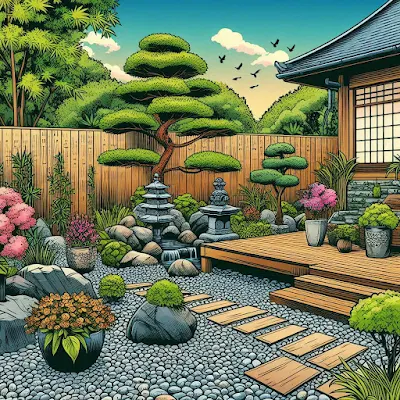
Your Garden Doesn't Have to Be Perfect
There will be weeds.
Leaves will fall.
Flowers will fade.
Something will probably eat the thing you were most excited about growing.
A pot will crack.
A plant will mysteriously die despite your best efforts.
Welcome to gardening. 😂
The goal isn't perfection.
The goal is creating a place where life happens.
A place where you can step away from screens and schedules for a little while.
A place where you can grow something, listen to something, smell something, taste something, or simply sit quietly.
Your zen garden doesn't need to look like anyone else's.
It doesn't even need to be traditionally "zen."
It just needs to make you want to stay awhile.
So plant the flowers.
Grow the herbs.
Add the little fountain.
Hang the wind chime.
Put a chair beneath the tree.
Watch the moon.
And give yourself permission to enjoy the garden you created. 🌿🌙
Practical Gardening Note
Plant choices, watering needs, shade requirements, frost tolerance, pest pressure, and planting times vary considerably by climate and region. Choose plants suited to your local growing conditions and adjust garden design, irrigation, seasonal care, and maintenance accordingly. Native and regionally adapted plants can be especially useful when creating a lower-maintenance wildlife-friendly garden.


