May Day: The History, Traditions & Magic of May 1
There is something wonderfully cheerful about May Day.
After the long quiet of winter and the unpredictable freshness of early spring, May arrives with flowers blooming, gardens waking up, birds singing, and the unmistakable feeling that the world is finally stretching its arms toward summer.
For thousands of years, people have celebrated this seasonal turning point.
May Day, celebrated on May 1, is one of the oldest spring celebrations in the Northern Hemisphere.
But May Day isn't just one tradition.
It is a fascinating collection of ancient seasonal customs, folk traditions, flower celebrations, community gatherings, dancing, bonfires, Maypoles, May Queens, and, in the modern era, an important day associated with workers and labor movements.
In other words, May Day has quite the history.
Let's wander through it. 🌿
What Is May Day?
May Day is traditionally celebrated on May 1, marking the arrival of May and the heart of spring in the Northern Hemisphere.
The celebration has roots in ancient seasonal festivals, particularly traditions connected with fertility, planting, flowers, livestock, and the return of warmer weather.
Over time, different cultures developed their own customs surrounding the beginning of May.
Some welcomed the season with flowers and greenery.
Some lit fires.
Some danced around decorated poles.
Some crowned a May Queen.
Some carried flowers from house to house.
And eventually, May 1 became an important date in the history of workers and labor movements around the world.
That makes May Day an unusual holiday because it carries several different layers of history at once.
The Ancient Roots of May Day
The celebration of May 1 is closely connected with older European traditions welcoming the arrival of summer.
In many premodern societies, the changing seasons were deeply important.
The return of warmth meant growing crops, grazing animals, gathering food, and preparing for the productive months ahead.
Spring wasn't simply a pretty season.
It was survival.
Naturally, people developed rituals and celebrations around the seasonal transition.
One of the best-known traditions is Beltane, a Gaelic festival traditionally associated with the beginning of summer.
Historically, Beltane was observed around the beginning of May and was associated with fire, livestock, protection, fertility, and the seasonal movement toward summer.
Bonfires were an important part of the celebration.
Cattle were traditionally driven between or around fires in some communities as part of protective and seasonal customs.
Flowers, greenery, and other signs of new life also played an important role.
Although May Day and Beltane are not identical traditions, they share a broader seasonal theme:
Winter is ending. The growing season is beginning.
May Day and the Roman Festival of Flora
Another ancient spring tradition associated with this time of year was Floralia, a Roman festival honoring Flora, the goddess associated with flowers and flowering plants.
Floralia was celebrated in late April and early May.
The festivities included flowers, games, performances, and public celebrations.
Flora's association with blooming plants makes her an especially fitting figure for a spring festival.
After all, May is when the landscape begins showing off.
The trees leaf out.
Gardens fill with color.
Wildflowers appear along roadsides and fields.
And suddenly everything that looked brown and sleepy a few weeks earlier seems determined to become green at once.
The Maypole Tradition
Perhaps the most recognizable May Day tradition is the Maypole.
A tall pole was decorated with flowers, greenery, ribbons, and other ornaments.
In later European traditions, especially in Britain and parts of Europe, people danced around the Maypole, sometimes weaving ribbons around it as they moved.
The Maypole became a symbol of spring, celebration, community, and the renewal of life.
The dances could be elaborate, with carefully practiced patterns created as dancers moved around the pole.
Today, Maypole dances are still performed at some schools, folk festivals, historical events, and community celebrations.
And let's be honest, there is something delightfully whimsical about a group of people dancing around a flower-covered pole with ribbons flying everywhere.
Very much giving "the village has decided spring has officially begun."
The May Queen
Another traditional May Day custom is the crowning of a May Queen.
The May Queen was often a young woman chosen to represent spring or the beauty and abundance of the season.
She might be crowned with flowers and take part in a May Day procession or celebration.
The tradition varies considerably by place and period.
In some communities, the May Queen was part of a larger spring festival.
In others, the celebration centered around children, schools, village gatherings, or local customs.
Today, May Queens still appear in some traditional May Day celebrations and folk festivals.
May Baskets
One of the sweetest May Day customs is the May basket.
People would fill small baskets or containers with flowers, greenery, sweets, or small gifts.
The baskets could be given to friends, neighbors, loved ones, or someone who might appreciate a little springtime cheer.
In some traditions, the basket was secretly left at someone's door.
The recipient might discover the flowers and then try to figure out who left them.
It was a simple gesture, but it carried a lovely message:
Spring has arrived, and I thought of you.
You don't need an elaborate basket to revive this tradition.
A little jar of flowers from the garden, a bundle of herbs, or a tiny paper basket filled with wildflowers can carry the same spirit.
"Bring May In"
Flowers and greenery have long been associated with May Day.
People decorated homes, doors, churches, gathering places, and even animals with fresh greenery and blossoms.
The idea of bringing the living landscape indoors is particularly charming.
Imagine waking up on May 1 and gathering whatever is blooming nearby.
A few branches.
Some wildflowers.
A handful of herbs.
Whatever the garden is willing to surrender.
Put them in jars around the house.
Suddenly, you've brought May inside.
May Day Morning
Some folk traditions associated with May Day involved going outside early in the morning to gather flowers, greenery, or morning dew.
In folklore, May Day dew was sometimes believed to have special qualities connected with beauty, health, luck, or renewal.
Whether you take the folklore literally or simply enjoy the poetry of it, there is something beautiful about stepping outside early in the morning while the garden is still covered in dew.
You can hear the birds.
The air is cool.
The flowers are fresh.
And for a few minutes, the world feels wonderfully quiet.
That alone seems like a pretty good May Day ritual.
May Day Bonfires
Fire is another important element in some May Day traditions, particularly those connected with Beltane.
Bonfires have historically been associated with protection, purification, fertility, community gatherings, and the transition between seasons.
People gathered around the fires, and in some traditions livestock were brought near or between fires as part of seasonal protective customs.
Today, fire-based May Day celebrations can be found at some cultural and folk festivals.
If you're recreating a traditional bonfire celebration, of course, modern fire-safety rules come first.
The old traditions are charming.
Burning down the garden shed in their honor is considerably less charming. 😂
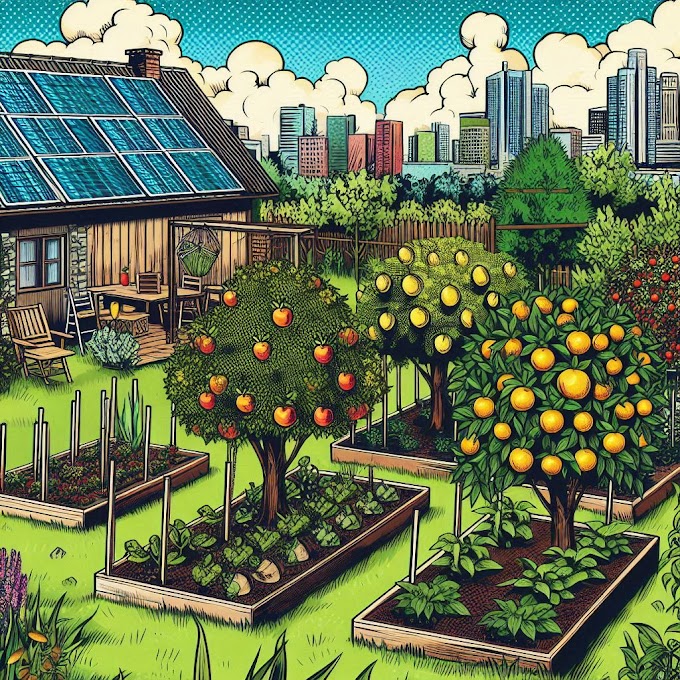
May Day in the Garden
For gardeners, May Day is particularly easy to love.
Depending on where you live, May can be a month of planting, harvesting, pruning, transplanting, and preparing the garden for the growing season.
A May Day celebration can become a celebration of the garden itself.
Plant something.
Gather flowers.
Make a wreath.
Start an herb garden.
Decorate a garden gate.
Create a little outdoor table for tea.
Leave a small bouquet on a neighbor's porch.
Or simply sit outside and appreciate what is growing.
You don't need an ancient ceremony to mark the season.
Sometimes the garden is ceremony enough.
May Day and the History of Labor
May Day has another important history that is completely separate from its springtime traditions.
May 1 is also recognized internationally as a day connected with workers and labor movements.
Its modern labor history is closely associated with the struggle for better working conditions and the campaign for the eight-hour workday.
The date became particularly significant after the events surrounding the 1886 labor demonstrations in Chicago, including the Haymarket affair.
Over time, May 1 became known internationally as International Workers' Day or International Labour Day.
In many countries, May Day is therefore primarily associated with workers, labor rights, demonstrations, parades, and political history rather than flowers and Maypoles.
In the United States, the traditional spring holiday and the labor observance developed along somewhat different cultural paths, with Labor Day becoming the major national U.S. holiday honoring workers.
So when someone says "May Day," they may be talking about flowers and Maypoles, workers and labor history, or both.
May Day Around the World
May Day traditions vary enormously.
In parts of Europe, celebrations may include Maypoles, dancing, flowers, processions, and community events.
In some places, villages maintain elaborate local traditions that have been passed down for generations.
In other communities, May Day is primarily recognized as a workers' holiday.
And in some regions, older spring customs have blended with newer celebrations.
That's one of the fascinating things about seasonal holidays.
They travel.
They change.
They pick up new customs.
They lose old ones.
And sometimes they circle back again.
Bringing May Day Into Modern Life
You don't have to recreate a medieval village festival to celebrate May Day.
In fact, a modern May Day celebration can be wonderfully simple.
Make a May Basket
Fill a small basket, paper cone, jar, or handmade container with flowers.
Add a handwritten note.
Leave it anonymously on someone's porch if you want to revive the old tradition.
Create a May Day Bouquet
Gather flowers from your garden or purchase a small bunch from a local flower stand.
Use whatever is blooming.
Wildflowers are especially charming.
Decorate the Door
Make a simple spring wreath from flowers, herbs, vines, branches, or greenery.
You can even make a little door bundle with rosemary, lavender, flowers, and ribbon.
Have a Garden Tea
Set up a small table outside.
Make tea.
Put out fruit, biscuits, sandwiches, or cake.
Add flowers to the table.
No elaborate party required.
Dance Around a Maypole
If you have children or a group of friends, create a simple Maypole with ribbons and decorate it with flowers.
You don't need to be an expert folk dancer.
In fact, slightly chaotic ribbon weaving may be more entertaining.
Plant Something
Choose a flower, herb, vegetable, or tree appropriate for your growing region.
Plant it on May Day and let it become your living reminder of the season.
Leave Flowers for Someone
This might be the simplest May Day tradition of all.
Give someone flowers just because.
No birthday.
No holiday obligation.
No reason other than:
"It's May, and I thought you could use some flowers."
A Simple May Day Ritual
If you'd like to bring a little old-fashioned seasonal magic into your day, try this:
On the morning of May 1:
- Step outside before the day becomes busy.
- Notice what is blooming.
- Gather a few flowers or pieces of greenery where permitted.
- Make a small bouquet.
- Think about something you want to grow in the coming season.
- Write that intention down.
- Place the flowers somewhere you will see them.
- Do one small kind thing for someone else.
That's it.
No complicated ceremony.
No expensive supplies.
Just a moment to recognize that another season has arrived.
May Day Is Really About Renewal
When you look at all these traditions together, a common theme begins to appear.
Renewal.
Flowers.
Fire.
Green branches.
Dancing.
Gardens.
Community.
Fertility.
New beginnings.
The return of warmth.
The beginning of the growing season.
Even the labor traditions surrounding May 1 carry a theme of renewal, though in a very different form: the desire to improve the conditions of everyday life and create a better future for working people.
May Day has changed many times throughout history.
But the basic idea remains surprisingly familiar.
Something is beginning.
Something is growing.
Something is changing.
And we are allowed to celebrate it.
Welcome, May
There is a reason spring celebrations have survived for so long.
After months of cold, darkness, dormancy, and waiting, the world suddenly becomes colorful again.
The trees turn green.
The flowers open.
The garden begins producing food.
The evenings stretch longer.
People spend more time outside.
And everything feels possible again.
So this May Day, gather some flowers.
Plant something.
Make a little basket.
Invite someone for tea.
Dance badly around a Maypole.
Light a safe fire if your local conditions and regulations allow it.
Or simply walk outside and notice what has changed.
You don't have to believe in old folklore to appreciate the symbolism.
You don't have to recreate an ancient festival perfectly.
You only have to pause long enough to recognize the season you're standing in.
Winter has loosened its grip.
The garden is waking up.
May has arrived.
And that seems like a pretty good reason to celebrate. 🌸🌿
Practical Garden Note
May gardening conditions vary dramatically depending on your climate, elevation, soil, and growing zone. Some gardeners may be planting warm-season crops in May, while others may already be harvesting or preparing for summer heat. Use your local frost dates, growing conditions, and regional planting recommendations when deciding what to plant or harvest.